Overdose Prevention in Skagit County
by Erin Williams and Jenny Sandbo, Nov 2026
Every death from an overdose is a tragedy. Family and friends often face a mix of heartbreak, shock, anger, guilt, and unanswered questions – all at once.
One individual shared that she didn't know her son was using painkillers. He came home from work one evening, fell asleep on the couch, and never woke up. There was fentanyl in his system.
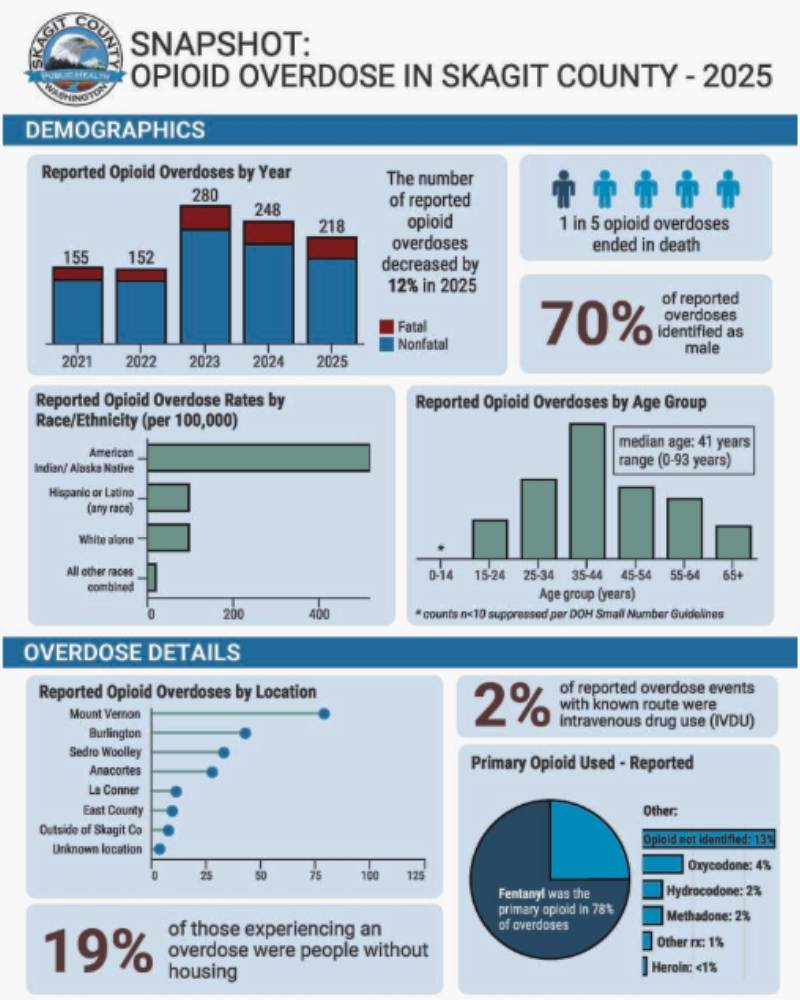
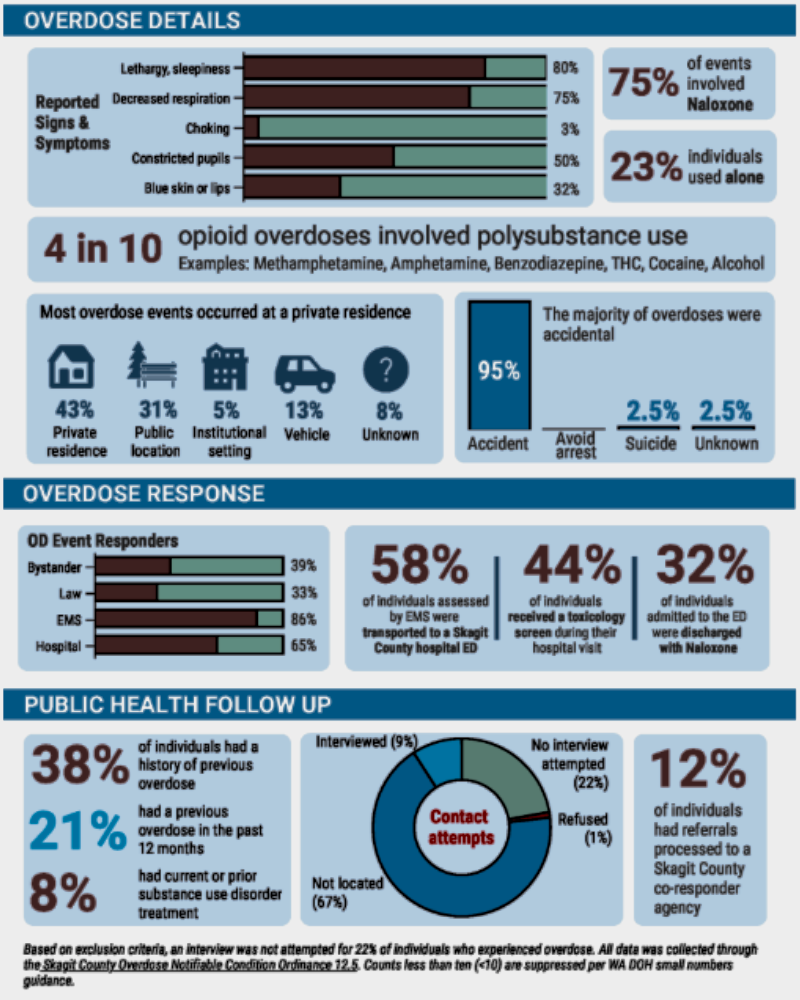
According to the most recent information released by the Washington State Dept of Health, there were 2,794 overdose deaths in Washington State in 2025. Seventy-six of those deaths occurred in Skagit County. Of these, fentanyl was the primary opioid responsible in 78% of cases (Skagit County Public Health, 2025).
Fentanyl is an extremely potent synthetic opioid used for clinical pain management and as a sedative in surgical applications. However, most fentanyl contributing to overdose deaths is made and obtained illegally.
Often, fentanyl is mixed into illegal drug supplies, so it can be very likely that an individual doesn't know they're taking it. Fentanyl is very potent, 50x stronger than heroin and 100x stronger than morphine. Overdose occurs when there is a high quantity of opioids or a combination of opioids and other drugs in a person's body. Their breathing becomes inadequate (slowing or stopping) and they become non-responsive to stimulation. Fentanyl, even in small amounts, can be fatal.
Fentanyl is not the only drug responsible for overdose deaths. All opioids, whether prescription or non-prescription, have serious side effects, and can lead to addiction or even overdose. It is important to only take these medications when they are prescribed to you, and only in the doses/frequency that was intended for you as determined by a doctor.
Prevention is key
From 2024 to 2025, the number of reported overdose events in Skagit County has gone down by 12%. Evidence shows that prevention work has made a positive difference in our community.
What you can do
Take only the prescribed amount and avoid substances that have not been prescribed to you
This seems like an obvious first step, but for people struggling with physical pain, mental health challenges, addiction, or are in situations with social pressure, this is not always the option they choose in the moment.
Secure prescription medications
A locked bag, cabinet, drawer or safe can go a long way to reduce theft, misuse, and accidental access at home. A locked bag also has the benefit of keeping meds safe during travel and if you carry your prescriptions with you on a daily basis.
Locking medication bags are available through many retailers, including Amazon. You can access free and low-cost bags through Locks Saves Lives, and Starts with One.
You can also request that District 304 mail a bag to you at no cost.
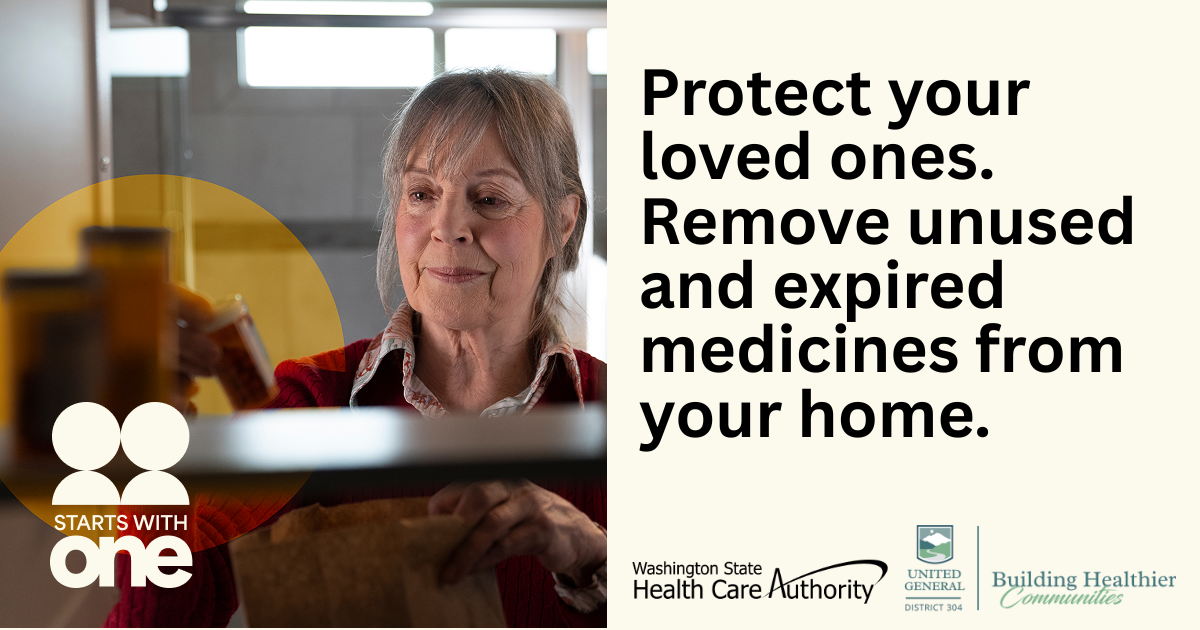
Safely dispose of unused medications
You cannot tell if a drug contains fentanyl by looking, tasting or smelling it. The only way to discover if a substance contains fentanyl is by testing.
Fentanyl test strips are legal in most states, including Washington, and are 96 to 100% accurate when used correctly. Here in Skagit County they can be obtained at the Skagit County Public Health Department, Mobile Syringe Exchange and at online retailers like Amazon, Walgreens, and Walmart.
Test it before you take it.
In Skagit County, most pharmacies and hospitals have drop boxes for disposing of unused prescription medications. In April and October, the U.S. Drug Enforcement Administration (DEA) hosts National Take Back Day providing additional education and opportunities for disposal.
Find a drop location near you or order a free mailer through MedProject.org.
Carry naloxone
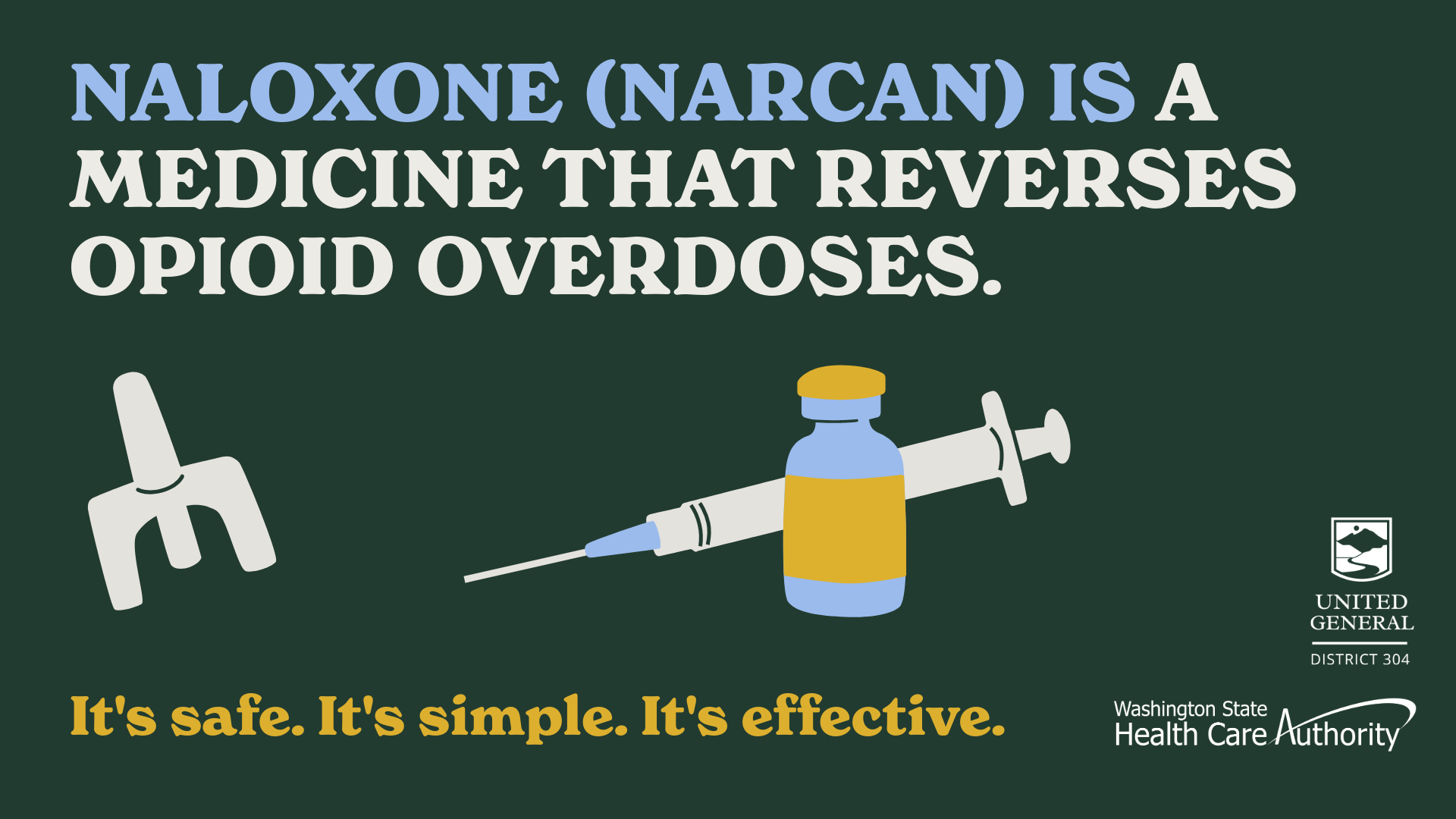
Naloxone is the medication that reverses the effects of an opioid overdose. Anyone who lives, works, or goes to school in Skagit County can obtain naloxone for free.
Stop by the office at Skagit County Public Health to pick up. You can also have it mailed to you by calling 360-416-1500.
Naloxone (brand name Narcan) is available over the counter at most pharmacies. It's covered by Medicaid and partially covered by many insurance policies.
Thanks to a Statewide Standing Order to Dispense Naloxone, many community-based organizations (CBOs) are approved to dispense and deliver naloxone products. Since 2023, United General District 304 has trained over 300 community members and distributed 850 doses of naloxone for free.
Know how to administer naloxone
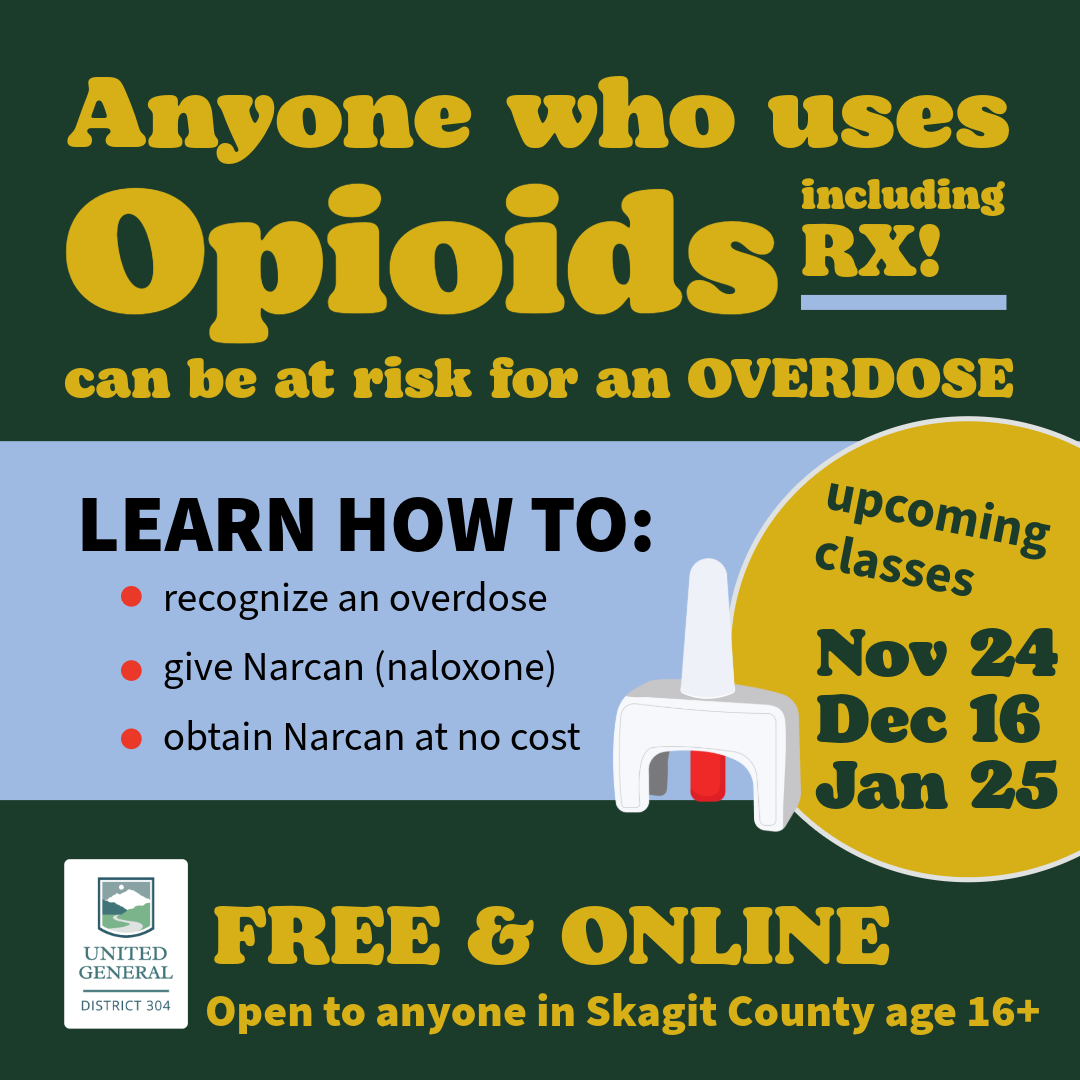
United General District 304 has partnered with the American Red Cross and Northwest High Intensity Drug Trafficking Area (HIDTA) to offer education opportunities for providing first response overdose care.
CPR, AED, and First Aid Training – $120. In-person and hands-on. For ages 12 and up.
Overdose Response Training – FREE*. Online. For ages 16 and up.
*This training is provided by United General District 304 at no cost thanks to funding from Northwest HIDTA (High Intensity Drug Trafficking Area)
Ask for help
There are many complex factors that contribute to substance misuse including biological, psychological, developmental factors, as well as social and family influences.
Recovery is possible through medication, behavioral therapy, and community support. If you or someone in your life is ready to seek assistance, there are resources. Visit SkagitRising.org for a complete list of local services.
You can also call 988 to speak with a counselor who can help you or your loved one connect with resources for challenging situations like substance misuse, family issues, cultural or gender identity crisis, domestic violence, suicidal thoughts, illness and loneliness.
This service is available in multiple languages, for deaf or hard of hearing, for Native populations, and veterans.
Organizations that dispense naloxone and/or provide related services
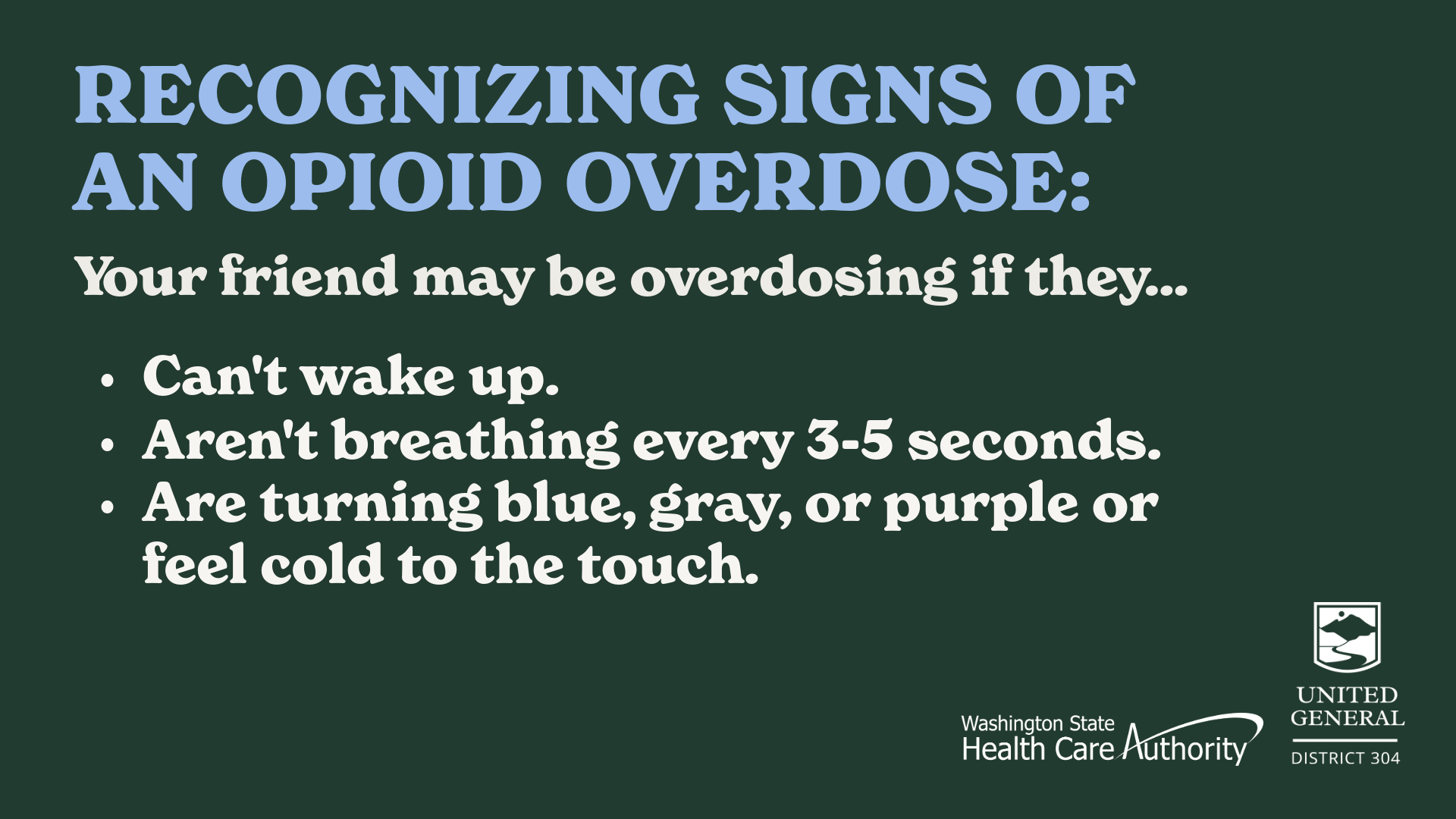
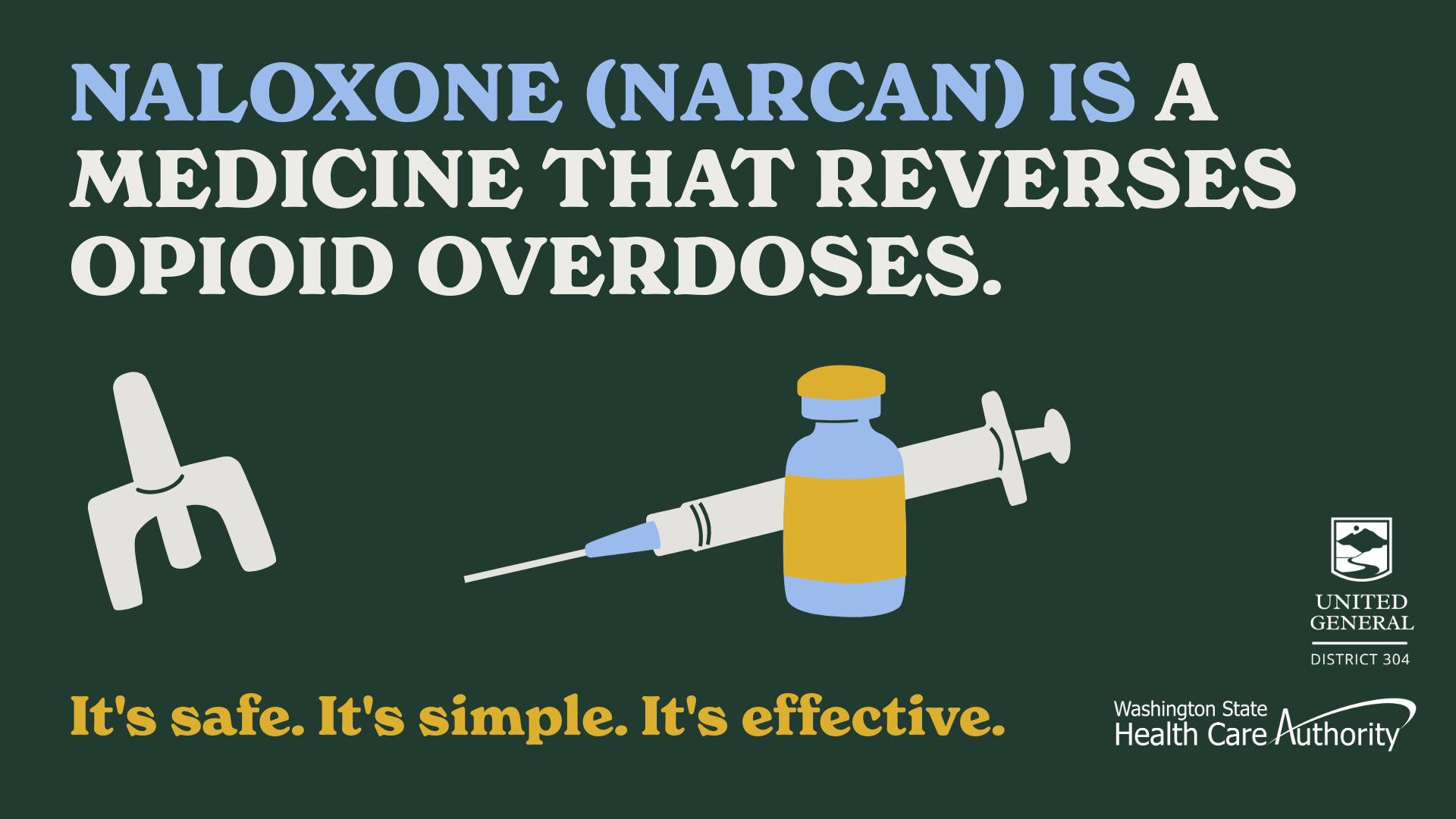
Look for the “Friends for Life” billboards around Skagit County. A statewide campaign in partnership with Washington State Health Care Authority (HCA).
How does United General District 304 support prevention?
Friends for Life
District 304 is participating in this statewide campaign to inform people about:
- What illegal fentanyl is and how it's affecting Washington state
- How to help teens avoid opioids like fentanyl
- How to recognize and respond to an opioid overdose
- How to get and use naloxone (Narcan)
The campaign is funded by the Washington State Health Care Authority (HCA).
National Drug Take Back Day
National Drug Take Back Day is a twice annual U.S. Drug Enforcement Administration (DEA) initiative that encourages disposal of unused or expired medications. Initiatives like Drug Take Back Days help to ensure that unused prescription medications don’t get into the wrong hands.
Starts with One
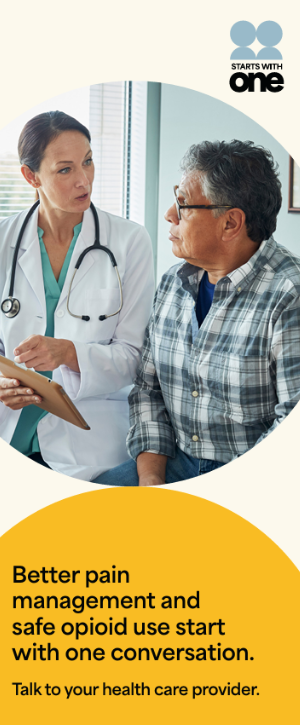
The Starts with One campaign is designed to inform and educate people experiencing acute pain, whether due to injury or surgery, about their pain management options, the risks of prescription opioids, and safe storage and disposal. This campaign is funded by the Washington State Health Care Authority.
Overdose Prevention
We partner with the American Red Cross and Northwest High Intensity Drug Trafficking Area (HIDTA) to provide emergency first response training.
988 Lifeline
988 is the new three-digit dialing code that will route callers to the National Suicide Prevention Lifeline (now known as the 988 Suicide & Crisis Lifeline) and is active across the United States. The previous Lifeline number (1-800-273-8255) is also still active.
When people call, text, or chat 988, they are connected to trained counselors that are part of the existing Lifeline network. Counselors will listen, work to understand how problems are affecting someone's life, provide immediate support, and connect them to additional resources if necessary.
Suicide Prevention
Question, Persuade, Refer is an evidence-based training that offers a simple, three-step plan for suicide prevention. QPR teaches learners how to recognize the signs that a suicide crisis may be developing, and how to ask the question of if someone is considering ending their life.

Erin is a program coordinator with District 304 focusing on mental health and prevention. She leads a variety of community education courses including Suicide Prevention, Overdose Prevention, and early childhood initiatives.
Jenny supports the District 304 team as a marketing and communications specialist, engaging the community in activities to support health and wellness.